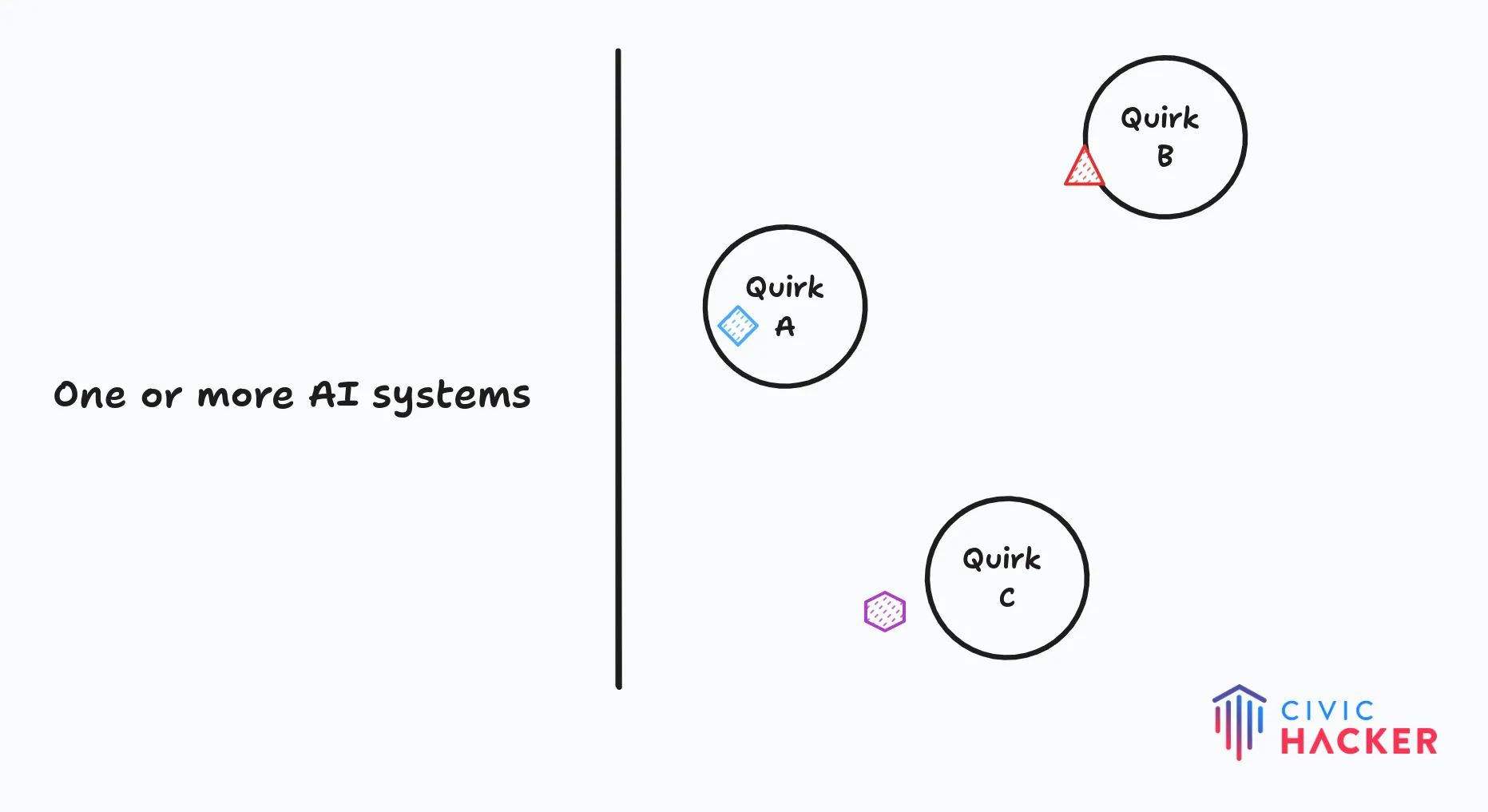
Here are our notes
We face obstacles in improving school safety due to extreme partisanship from both sides. But together, we can work towards finding solutions that are fair and inclusive for all members of our community. Your input and support will help us in our ongoing efforts to research non-partisan and anti-oppressive strategies to tackle these issues.
Yes, Let's work togetherWe've Joined forces with the NIST
Civic Hacker is collaborating with the National Institute of Standards and Technology (NIST) in the Artificial Intelligence Consortium to establish a new measurement science that will enable the identification of proven, scalable, and interoperable measurements and methodologies to promote innovative and secure development of AI. NIST does not evaluate commercial products under this Consortium and does not endorse any product or service used. Additional information on this Consortium can be found in the Federal Register at 88 FR 75276 and 91 FR 32007.
Question: What are quirks
... and what are some examples?
Answer
Human Quirks
Human Quirks are constructs embedded within the human experience with social, technical and physical components.
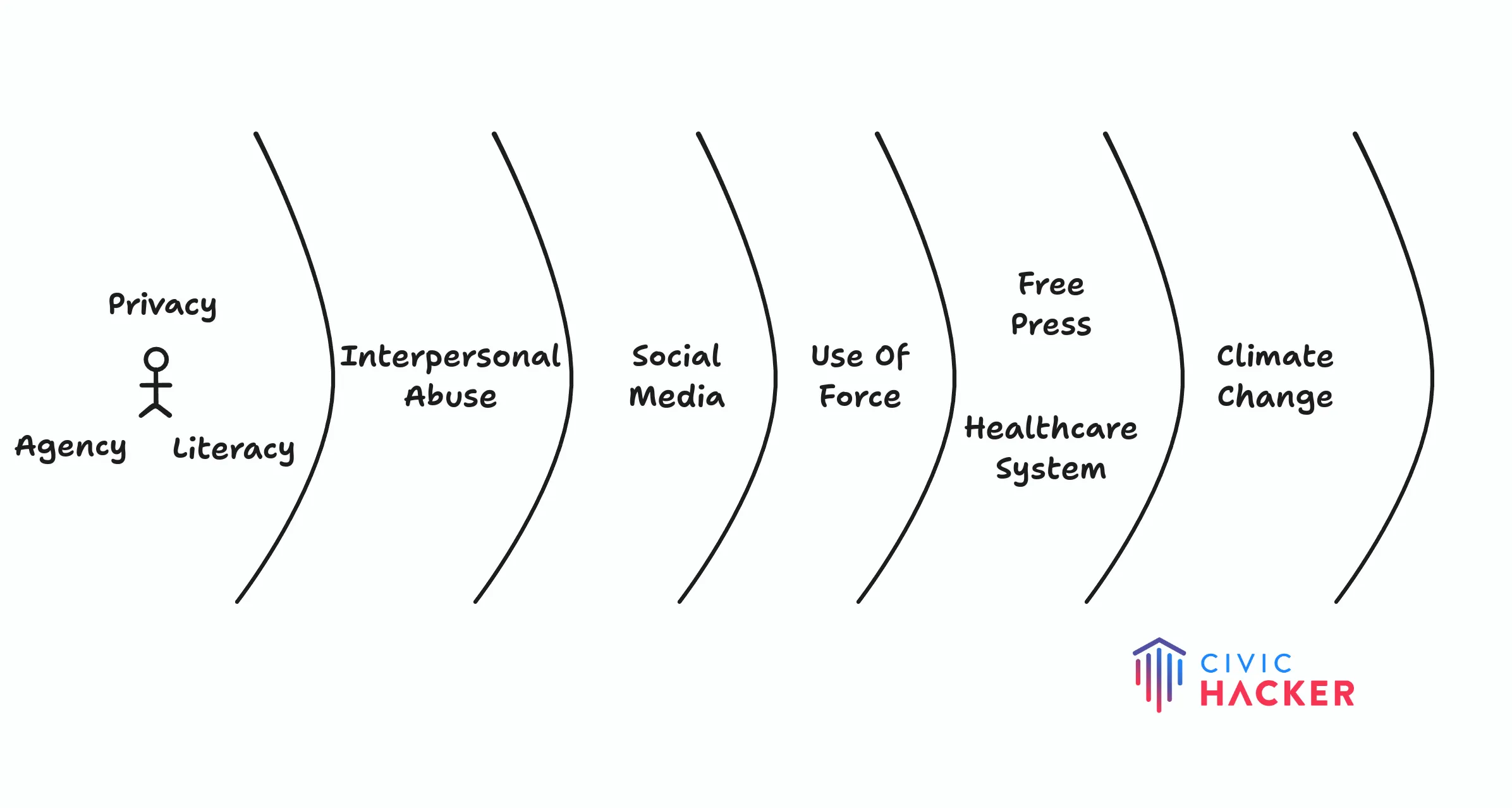
Our specific interest is on the impact of emerging technologies, like Artificial Intelligence, on the lived experiences of individuals and unique concerns of communities of all sizes with respect to this subset of constructs:
- Agency
- Climate Change
- Free Press
- Healthcare System
- Interpersonal Abuse
- Literacy
- Privacy
- Social Media
- Use of Force
About the 'Human Quirks' Framework
The framework consists of these questions to dive deeper into how we built the framework.
Guiding Question 1
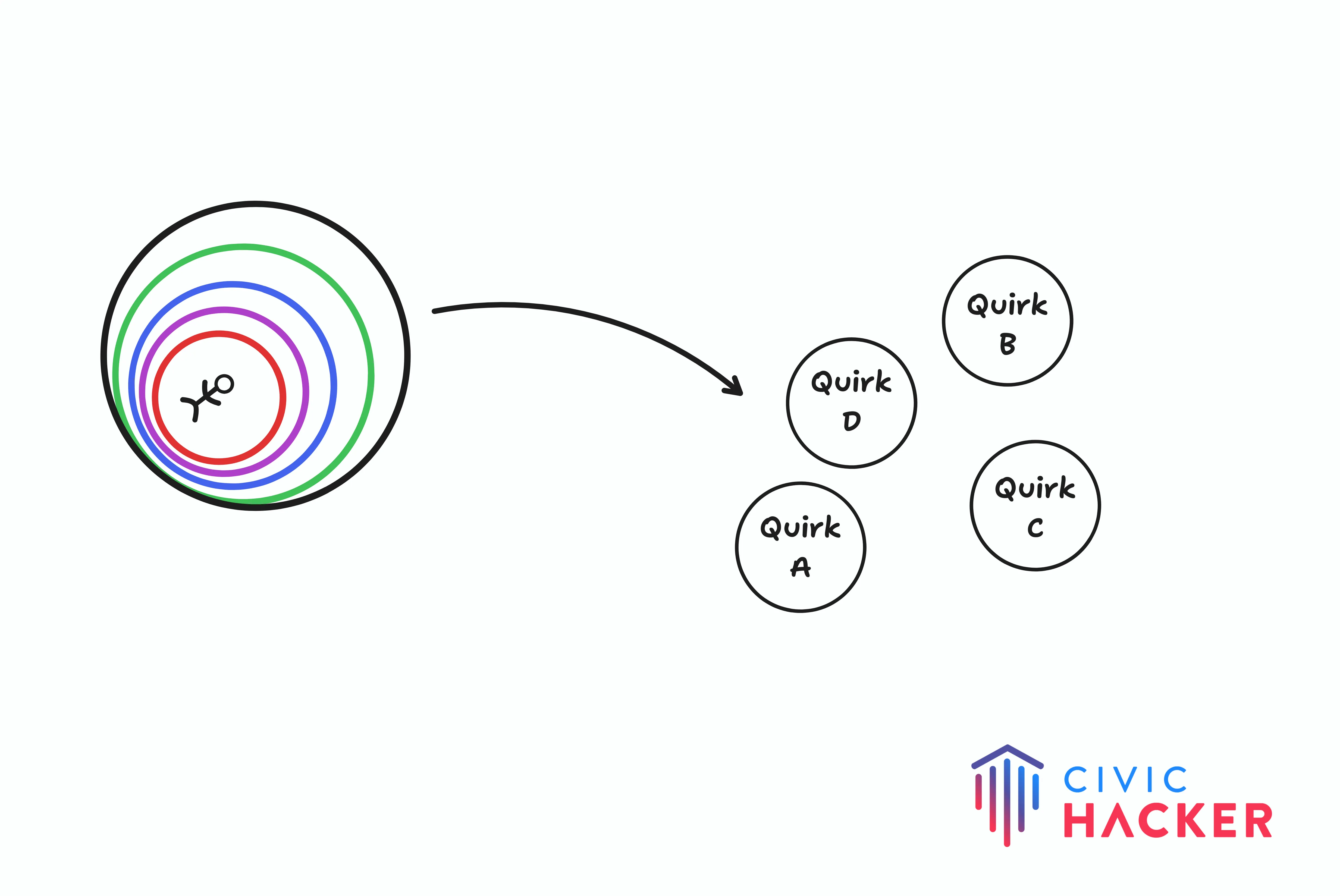
What are the topics that shape our views and impact our pursuits with a specific emerging technology?
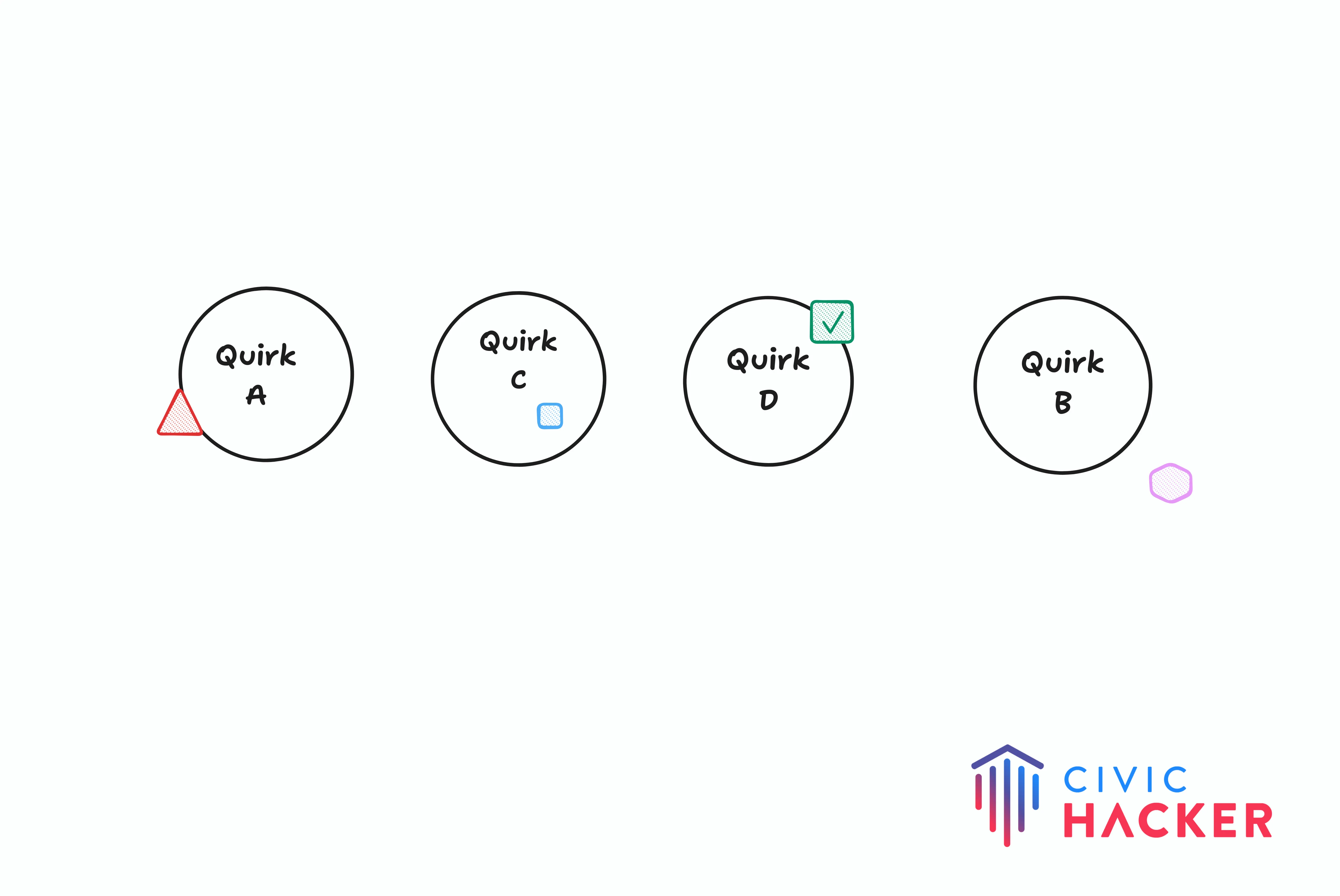
Quirks are patterns of behavior pertaining to cultural archetypes, Human-made systems, physiology, visual/auditory perception, and social avenues of the Human experience.
- Algorithmic Injustice
- copyright protection
- gender-based violence
Guiding Question 2
How can technology serve as a transport for addressing our concerns beyond Human Needs?
The hardware, networks and bits that make up the Web (OSI and TCP/IP models) usually are referred to as layers 1 through 7. The field of Human-Computer Interaction studies all the ways we interact with computers (visual, auditory, tactile) impact our performance and needs representing layers 8, 9, and 10, respectively. We call what lays beyond Human Needs, 'Layer 11'.
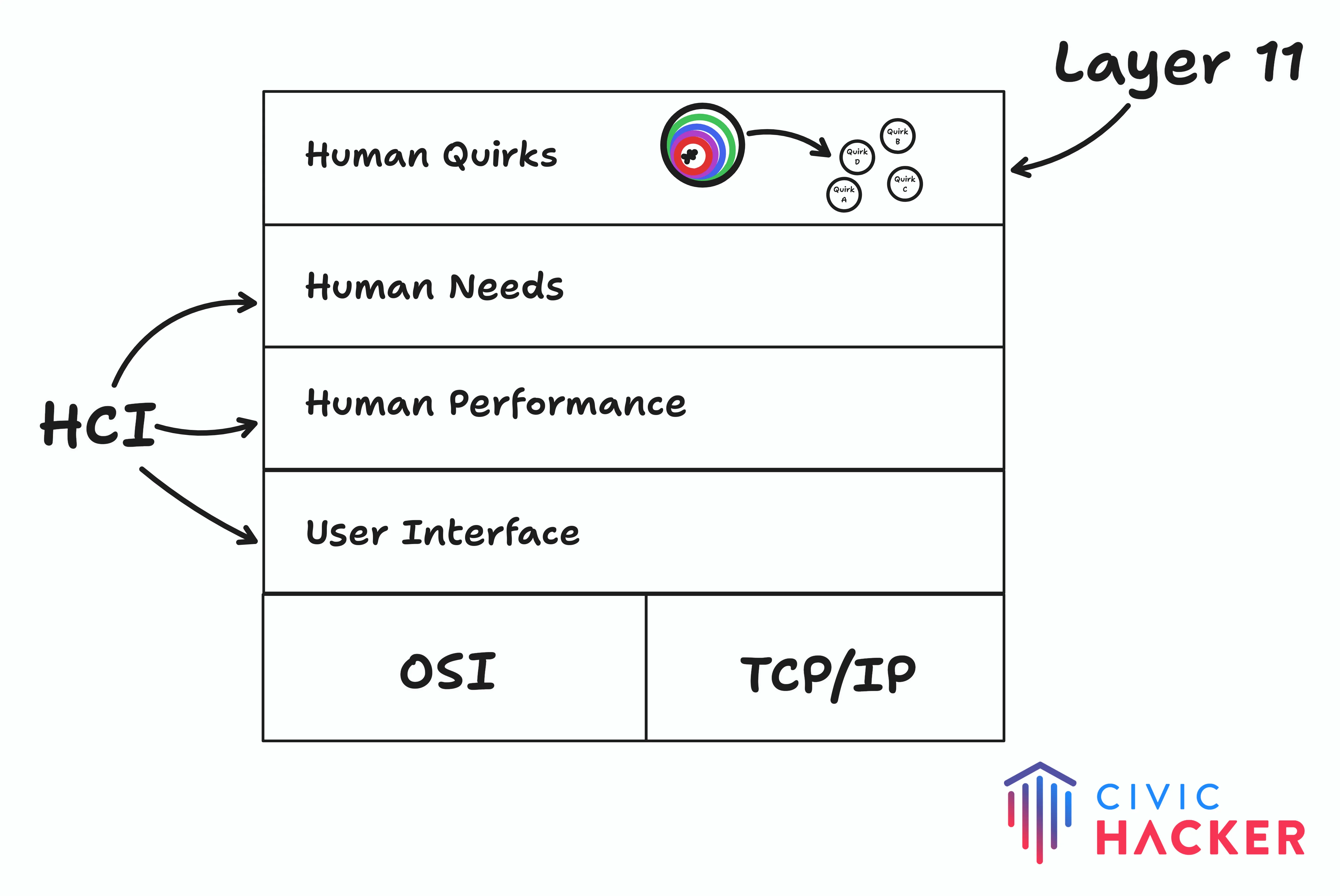
- Human-Computer Interaction (HCI) - An extension of the Seven-Layer OSI Model depicting Human use of interfaces to achieve Human need through Human performance.
- Open Systems Interconnection (OSI) Model
- Transmission Control Protocol/Internet Protocol (TCP/IP) Model
Guiding Question 3
How do we fortify against the negative impact of AI while still encouraging innovation?
Defenses may be active, passive and may come in the form of laws, standards, software, data, and other methodologies to deter the misuse of AI.
A number of efforts from new regulations to adversarial machine learning techniques:
- Adversarial Machine Learning
- AI Risk Management Framework
- Open Standards
- Laws & Regulation